


Question
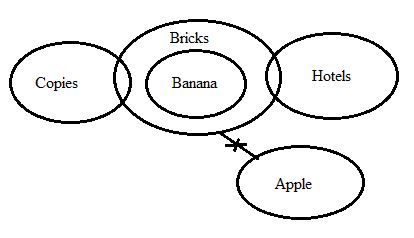
Statements: Some bricks are hotels. All bananas are bricks. No apple is a brick. Some copies are bricks. Conclusions:
Statements: Some bricks are hotels. All bananas are bricks. No apple is a brick. Some copies are bricks. Conclusions:
I. Some hotels are apples.
II. Some hotels are not apples.
III. Some bananas are not apples.
IV. Some apples are not copies.
More Syllogism Questions
- Statements: All Paint is Bucket All Bucket is Plastic No Plastic is Harmful Conclusions: I. Some Paint can be Plastic II. Some Bucket can be Harmful
- Statements: Only like is love.Mostly like is comment.Some comments are subscribe. Conclusions: I. No love is an subscribe. II. Some comment is being love a...
- Statements : Some rows are lines All lines are parallels. All parallels a...
- In the questions given below, there are three statements followed by three conclusions I, II and III. You have to take the three given statements to be tru...
- Conclusions: Some Tables can be Chair. Some Chairs being Sticks is a possibility. Some Walls can be Chairs.
- Statements: Some authors are teachers. All teachers are poets. Some poets are artists. Conclusions: I. Some authors are poets. II. Some teachers are ...
- In the questions given below there are three statements followed by three conclusions I, II and III. You have to take the three given statements to be true...
- Statements: Only a few Cloud are Rain. Some Rain are Rainbow. Only Rainbow are Sky . No rain is a Universe. Conclusion: I. Some rainbow are definitely not ...
- Statements: Every Demand are Supply. Few Supply are Inflation. Only a few Inflation are Deflations. Conclusions: I. All Supply can be Deflations II. Some I...
- Statements-: Only a few Apple are not Mango Some mangoes are orange All orange are grapes Conclusions-: I. All orange being apple is a possibility. II. s...
Relevant for Exams:
Hey! Ask a query
Please enter email id
The email must be a valid email address.
Please enter Mobile Number
Please enter valid Mobile Number
Please enter your Doubt

Think You're Ready for RBI Grade B?
RBI Grade B 2026 Phase 1 Memory Based Paper
- 200 Questions with Detailed Solutions
- Section-wise Coverage (GA, English, Quant & Reasoning)