


Question
Which of the following combination of person meet with C?
Study the following information carefully and answer the below questions. Nine friends namely – A, B, C, D, E, F, G, H and I attend a meeting. Each person likes different number viz. 2, 4, 8, 10, 12, 14, 16, 20 and 24. They meet with each other but in a particular way. The one who likes prime number do not meet with the one who likes non-prime number and vice-versa. All person meet with at least one person. The one who likes 20 meet with
A. A likes 4 but doesn’t meet with E. H likes perfect square number and meet with atleast two persons. The one who likes 24 meet with
B. G likes 10 and meet with all the person. Sum of numbers liked by I and B is 26. D meet with the one who likes 14 but not with E. The one who meet with D also meet with
B. A meet with two persons but not with H. C neither likes 12 nor meet with
I. The one who likes 12 meet with the one who likes lowest number. Person who likes perfect square number meet with at least two persons. E Meet with H but doesn’t likes 20. I meet with one person.
A. A likes 4 but doesn’t meet with E. H likes perfect square number and meet with atleast two persons. The one who likes 24 meet with
B. G likes 10 and meet with all the person. Sum of numbers liked by I and B is 26. D meet with the one who likes 14 but not with E. The one who meet with D also meet with
B. A meet with two persons but not with H. C neither likes 12 nor meet with
I. The one who likes 12 meet with the one who likes lowest number. Person who likes perfect square number meet with at least two persons. E Meet with H but doesn’t likes 20. I meet with one person.
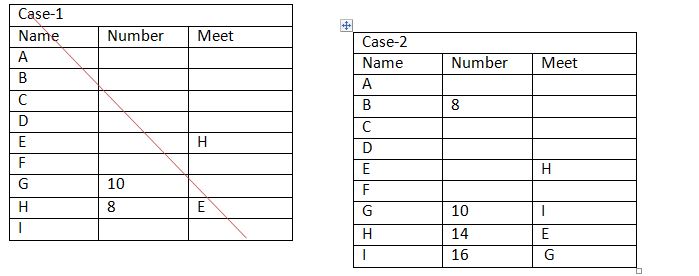 Case (1) is not valid as B likes 8. Again, we have: The one who likes 20 meet with A. A likes 4 but doesn’t meet with E. As, E doesn’t like 20, that means E must likes 24. The one who likes 24 meet with B, that means E meet with B. A meet with two persons but not with H. D meet with the one who likes 14 but not with E, that means D likes 20 and meet with H. C neither likes 12 nor meet with I, as only remaining persons are those who likes prime number, that means C likes 2 and F likes 12. The one who meet with D also meet with B. As, H meet with atleast two persons and E doesn’t meet with D, thus A meet with B. The one who likes 12 meet with the one who likes lowest number, that means F meet with C. Based on above given information we have final arrangement as follow: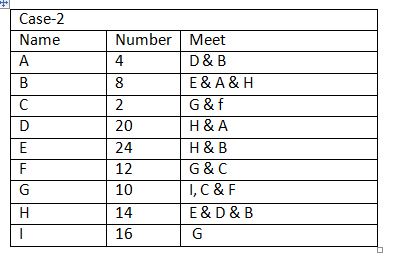
More Puzzles Questions
- Four of the following five are alike in a certain way as per the given arrangement and hence form a group. Find the one who doesn’t belong to that group.
- How many people have birthdays before S?
- Which of following is/are correct?
- Which of the following combination is true?
- The person who likes Grapes goes to which country?
- How many persons between the person whose birth year is 1964 and the person who works for Sbi Company?
- How many boxes are kept in the container?
- Who among the following has off day immediately on the next day of Mahi’s off day?
- How many such pair(s) of letters are in the word “DISTRIBUTION” which has as many letters between them (both forward and backward) as in the English alphab...
- Which person plays match in March?
Hey! Ask a query
Please enter email id
The email must be a valid email address.
Please enter Mobile Number
Please enter valid Mobile Number
Please enter your Doubt

Think You're Ready for RBI Grade B?
RBI Grade B 2026 Phase 1 Memory Based Paper
- 200 Questions with Detailed Solutions
- Section-wise Coverage (GA, English, Quant & Reasoning)