


Question
Find the odd one out.
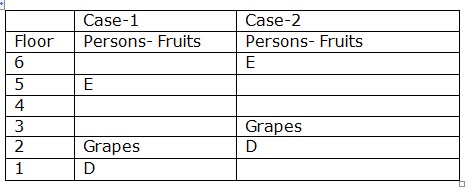 Again we have, The one who likes banana lives two floors above D.A lives three floors above the one who likes mango. A doesn’t like banana.
 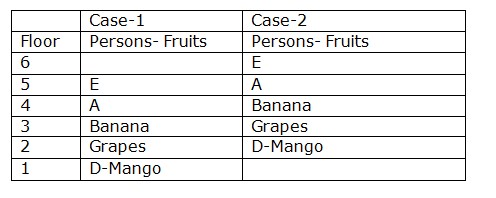 Again we have, No one lives between the one who likes papaya and watermelon. Only three persons live between B and the one who likes watermelon. The one, who likes mango, lives on the adjacent floor of C. From the above condition, case 1 gets eliminated. hence, case 2 shows the final arrangement.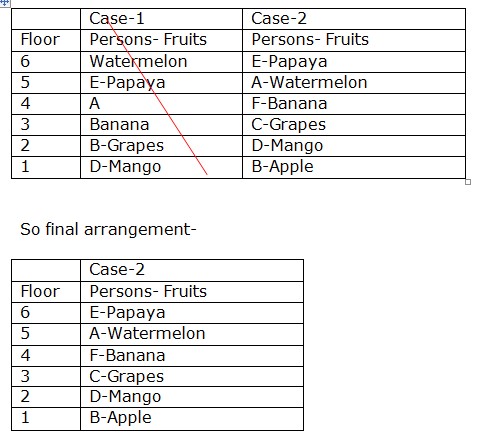
More Puzzles Questions
- On which floor does the person live who likes Nokia?
- How many floors are there between Friend of P and the person who lives on the second floor of the building?
- R attends the marriage on which of the following date and month?
- How many persons visits after the one who visits Jhansi?
- Which one of the following combination is incorrect?
- Which is the first function to be held in the banquet hall
- Who among the following lives immediately below Z?
- __ lives immediately below F in the same type of flat.
- Who among the following likes FIT?
- Which of the following is the correct Function – Day combination
Relevant for Exams:
Hey! Ask a query
Please enter email id
The email must be a valid email address.
Please enter Mobile Number
Please enter valid Mobile Number
Please enter your Doubt

Think You're Ready for RBI Grade B?
RBI Grade B 2026 Phase 1 Memory Based Paper
- 200 Questions with Detailed Solutions
- Section-wise Coverage (GA, English, Quant & Reasoning)