


Question
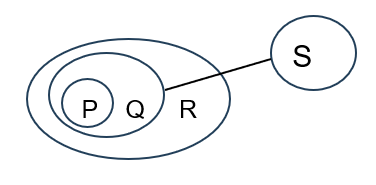
Statements: All P are Q All Q are R No Q is a S Conclusion:
Statements: All P are Q All Q are R No Q is a S Conclusion:
I. Some R are not S.
II. No P is a S
III. All R are P
More Syllogism Questions
- In the question below there are three statements followed by three conclusions I, II and III. You have to take the three given statements to be true even i...
- Statements: Only a few Airtel are ideas Some ideas are not vodafone No vodafone are JIO Only a few JIO are BSNL Conclusions: I). Some airtel are vodafon...
- Statements: All shares are debentures. No debenture is an equity. Conclusions: I. No equity is a share. II. Som...
- Read the given statements and conclusions carefully. Assuming that the information given in the statements is true, even if it appears to be at variance wi...
- Read the given statements and conclusions carefully. Assuming that the information given in the statements is true, even if it appears to be at variance wi...
- Statements: No poem is a story. All stories are novels. All novels are articles. Conclusions: I. All articles are stories. II. No article is a poem. ...
- Statements: No cup is plate. Only a few plate is saucer. Some saucer is spoon. All spoon is juicer. Conclusions: I. Some plate are spoon. II. All sa...
- Statements: No silver is a finger. All fingers are diamonds. Some diamonds are ring...
- In the question below three statements are given fol lowed by three conclusions I and I I. You have to take the given statements to be true even if they ...
- Statements: Some threads are needles. Some needles are strings. Conclusions: I. Some needles are not strings. ...
Relevant for Exams:
Hey! Ask a query
Please enter email id
The email must be a valid email address.
Please enter Mobile Number
Please enter valid Mobile Number
Please enter your Doubt

Think You're Ready for RBI Grade B?
RBI Grade B 2026 Phase 1 Memory Based Paper
- 200 Questions with Detailed Solutions
- Section-wise Coverage (GA, English, Quant & Reasoning)