


Question
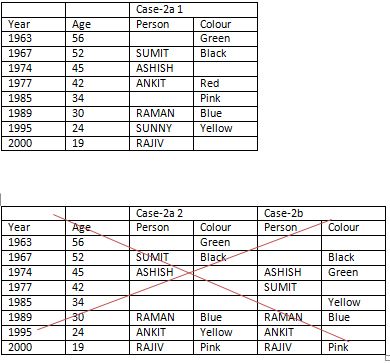
What is the sum of ages of persons whose ages are multiple of 5?
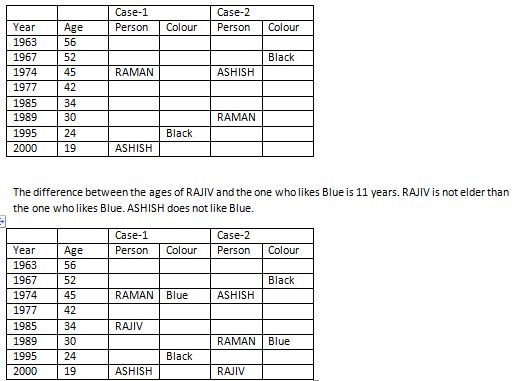 SUMIT was born immediately after the one who likes Green. As many persons born after SUMIT is same as the persons before the one who likes Yellow.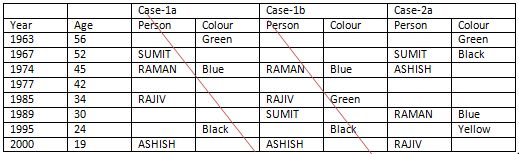
More Puzzles Questions
- What is car of the person who went toBali?
- Read the directions carefully and answer the following questions. A, B, C, D, E, and F live on a three floored building. The bottommost floor is numbered ...
- How many persons live between E and F?
- What is the position of R with respect to T?
- How many persons live below K (considering both types of flats)?
- Which among the following groups is working in Reliance?
- Which is the first function to be held in the banquet hall
- What is the age of the one who likes Mango?
- Which of the following combination is not true?
- On what month does B make a booking?
Relevant for Exams:
Hey! Ask a query
Please enter email id
The email must be a valid email address.
Please enter Mobile Number
Please enter valid Mobile Number
Please enter your Doubt

Think You're Ready for RBI Grade B?
RBI Grade B 2026 Phase 1 Memory Based Paper
- 200 Questions with Detailed Solutions
- Section-wise Coverage (GA, English, Quant & Reasoning)