


Question
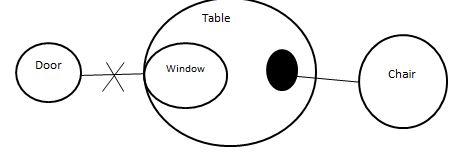
Statement: Few Doors are not window. All windows are table. Only a few tables are chair. Conclusion:
Statement: Few Doors are not window. All windows are table. Only a few tables are chair. Conclusion:
I. All doors can be window.
II. Some doors are not chair is a possibility.
III. Some chairs are not window.
IV. All chair are door.
More Syllogism Questions
- Statements: A few Platform are Train Only a few Train are SUV Only Car are Bus No SUV are Car Conclusions: I. Some Bus being Train is not a possibili...
- Statements: Some Branches are not Outlets. Only a few Outlets are Stores. All Stores are Camps. Only a few Camps are Godown. Conclusions: I. Some St...
- Statements: Some tiger are lion. No cat is elephant. Conclusions: I. All lion are tiger ...
- In the questions given below there are three statements followed by three conclusions I, II and III. You have to take the three given statements to be true...
- Statements: All flowers are books. All books are carpets. Some carpets are keys. Some keys are locks. Conclusions:I. Some keys are books. II. Some key...
- Statements: Some guitars are harmoniums. No harmonium is a sitar. Conclusions: I. Some guitars are not sitars. II. Some sitars are not guita...
- In the questions given below, there are three statements followed by three conclusions I, II and III. You have to take the three given statements to be tru...
- Statements: Only a few hut is home Only few home is room Only room is apartment Conclusions: I. Some home being apartment is a possibility II. No room is h...
- Statement : All balls are pencils. All keys are balls. Conclusion: I. At least some pencils are keys. II. All pencils are balls.
- Three statements are followed by three conclusions numbered I, II, and III. You have to consider these statements to be true, even if they seem to be at va...
Hey! Ask a query
Please enter email id
The email must be a valid email address.
Please enter Mobile Number
Please enter valid Mobile Number
Please enter your Doubt

Think You're Ready for RBI Grade B?
RBI Grade B 2026 Phase 1 Memory Based Paper
- 200 Questions with Detailed Solutions
- Section-wise Coverage (GA, English, Quant & Reasoning)