


Question
Who among the following person visited on 9 May?
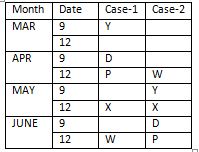 Again, we have: One person visits between Q and C, who visits after Q. A visits after Y but before Q. That means, in case (1) Q visited on 9 May, case (2) is not valid. Based on the above given information we have: Case (2) is not valid as A visits after Y but before Q.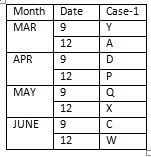
More Puzzles Questions
- Six boxes (S, T, U, V, W, and X) are kept one above another such that the bottommost box is numbered as 1 and the topmost box is numbered as 6 but not nece...
- How many persons secured more marks than E?
- Who lives just above C.
- How many members are there in Anmol’s family?
- Which of the following statements is correct?
- Who among the following is younger than Rakesh only?
- Which box is placed just above box which has 220 fruits?
- How many rows are vacant?
- C attends which of the following seminars?
- Who among the following celebrate their birthdays immediately before and immediately after Kansal?
Relevant for Exams:
Hey! Ask a query
Please enter email id
The email must be a valid email address.
Please enter Mobile Number
Please enter valid Mobile Number
Please enter your Doubt

Think You're Ready for RBI Grade B?
RBI Grade B 2026 Phase 1 Memory Based Paper
- 200 Questions with Detailed Solutions
- Section-wise Coverage (GA, English, Quant & Reasoning)