


Question
Four of the following five are related to each other in some manner to form a group. Which of the following doesn't belong to that group?
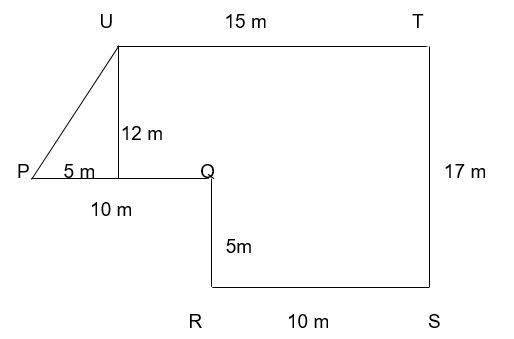 First person is in north-west of second person in each option except in option [d]. T is in east of U.
More Direction and Distance Questions
- Swati drives 55 kms towards East, turns right and drives 50 kms, then turns left and drives 30 kms. In which direction is she facing now?
- Rahul facing towards north moved straight 5 km and from there he turned 90° to his right and travelled 4 km. Then he took a 90° turn to the right and trave...
- Find the missing term in the series? 31, 39, 49, 61, 75, __
- Kirti started walking towards South. After walking 100 meters she turned to her Left and walked 60 meters and took a left turn and walked 50 meter. Again s...
- Q is 40 meter to the East of R. S is 36 meter to the north of R and 20 meter to the west of T. U is 50 meter to the South of T. U is 20 meter to the West o...
- O is in with direction with respect to G and what is the distance between O and G is?
- In which direction is point S with respect to point U?
- G @ H % I # J @ K, then in which direction is K with respect to H?
- Rupali is standing facing south. She walks 16km straight, then turns left and walks another 13km and turns right and walks 7km. Finally turns left and walk...
- what is the direction of G with respect to K?
Relevant for Exams:
Hey! Ask a query
Please enter email id
The email must be a valid email address.
Please enter Mobile Number
Please enter valid Mobile Number
Please enter your Doubt

Think You're Ready for RBI Grade B?
RBI Grade B 2026 Phase 1 Memory Based Paper
- 200 Questions with Detailed Solutions
- Section-wise Coverage (GA, English, Quant & Reasoning)