


Question
Which of the following does not belong to a group?
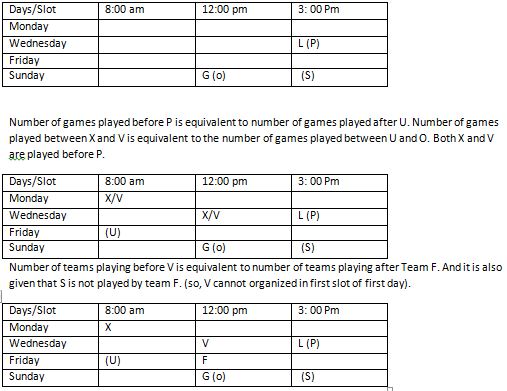 Only 3 teams play between team F and I. (so, we get 2 possible cases here as position of I is not confirmed). Case-1
 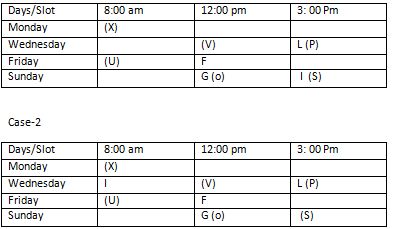 Team E plays X. Team D plays Y at 12:00pm. (so, only possibility is team D playing on Monday). Only 2 teams play between I and J teams Case-1
 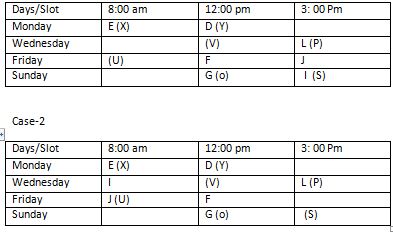 Team H plays U. (So, case 2 gets eliminated as it does not satisfy the condition). V and Z are played on the same day. (so, Z must be played on Wednesday). Q is played immediately before Z. Team A plays W. (only possible place is W is played on Sunday).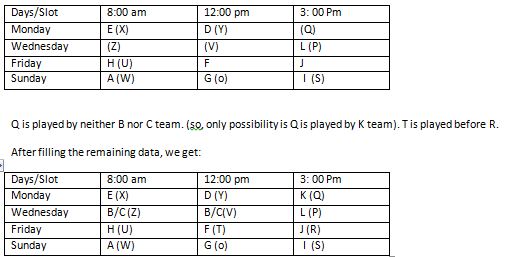
More Puzzles Questions
- __ and __ live on same floor.
- Which among the following pair of persons lives on the same floor?
- ___ is the Team Leader.
- Who worked in eBay and in which day of the week?
- How many assignments were completed by student Y?
- Who among the following person participates on August 17?
- As many people live above E is same as that of below___?
- How many persons sit between 5th youngest person of the family and A’s married son?
- Who lives on the same floor with A?
- Find the odd set of numbers from the given alternatives?
Hey! Ask a query
Please enter email id
The email must be a valid email address.
Please enter Mobile Number
Please enter valid Mobile Number
Please enter your Doubt

Think You're Ready for RBI Grade B?
RBI Grade B 2026 Phase 1 Memory Based Paper
- 200 Questions with Detailed Solutions
- Section-wise Coverage (GA, English, Quant & Reasoning)