


Question
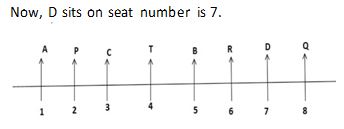
If in the last condition (v), it is stated that D sits on the seat number 7, then who will sit on the seat number 4?
More ESIC Part B Questions
- Match the following labour concept with their explanation:
- A man sold an article for ₹247.50, thereby gaining 12.5%. The cost of the article was:
- Some reasons highlighting the importance of delivering sex education in schools are mentioned below. Choose the incorrect option.
- Under which type of collective bargaining one party gains at the expense of another party?
- Consider the following statements regarding the valuation of inventories under AS 2: I. The cost of inventories includes purchase cost, conversion cost, an...
- Article 279A is related to which of the following constitutional bodies?
- With reference to Pradhan Mantri Kaushal Vikas Yojana, consider the following statements? 1. It is the flagship scheme of the Ministry of Labour and Em...
- Five friends A, B, C, D, and E are sitting in a straight row, facing north. A is not at the exact centre position of the row. C is second from one extreme ...
- Which of the following statements are true in regards to the Ahom kingdom of Assam? 1. Established in 1228 in the Brahmaputra valley of Assam 2. The ...
- Which of the following factors are likely to act as an obstacle for India to be a part of the global assembly chain for the Networked products? I. ...
Relevant for Exams:
Hey! Ask a query
Please enter email id
The email must be a valid email address.
Please enter Mobile Number
Please enter valid Mobile Number
Please enter your Doubt

Think You're Ready for RBI Grade B?
RBI Grade B 2026 Phase 1 Memory Based Paper
- 200 Questions with Detailed Solutions
- Section-wise Coverage (GA, English, Quant & Reasoning)