


Question
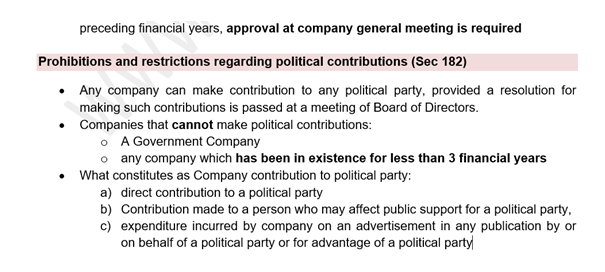
As per Section 182 of Companies Act 2013, a company, other than a Government company and a company which has been in existence for less than _____ financial year, may contribute any amount directly or indirectly to any political party.
More Financial Institutions Questions
- Factoring and forfeiting are two different ways of extending credit by financial institutions. Which of the following is NOT a difference between factoring...
- P-Notes are used by foreign entities to invest in Indian markets, via registered foreign investors, without registering themselves. Who regulates P-notes i...
- All of the following are part of money market, except _______
- What is the classical view of management’s social responsibility?
- Which financial centre ranks 1st in the Global Financial Centres Index 38 (GFCI 38)?
- Which of the following is not a recognized SEBI-registered intermediary?
- Which credit scoring agency is known for its "CRISIL Rating"?
- Which of the following ins titution is responsible for making recommendations for the appointment of whole -time directors and non-executive chairman...
- Which of the following markets are not regulated by RBI?
- An account with signs like frequent cheque returns and delayed payments is placed under:
Hey! Ask a query
Please enter email id
The email must be a valid email address.
Please enter Mobile Number
Please enter valid Mobile Number
Please enter your Doubt

Think You're Ready for RBI Grade B?
RBI Grade B 2026 Phase 1 Memory Based Paper
- 200 Questions with Detailed Solutions
- Section-wise Coverage (GA, English, Quant & Reasoning)