


Question
More Alternate Sources of Finance Questions
- The value of derivative is determined by
- A tendency for managers to evaluate most of their employees as "average", is called?
- Which of the following statements is CORRECT regarding the Profit–Volume (P/V) ratio?
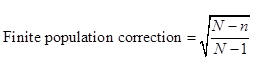
- A researcher collects multiple random samples from a population and calculates the sample means. He notices that the means vary across different samples. W...
- What is the cap on the cumulative exposure of Banks and NBFCs in Alternative Investment Funds (AIFs) , as a percentage of the AIF scheme corpus, as sta...
- The term float is used in:
- The transmission of information received from outside to internal members and subordinates is Manager’s role. It is ____ role of a manager.
- Which year did SEBI make BRSR mandatory for the top 1,000 listed entities by market capitalization?
- According to Henry Mintzberg, a manager has _____ roles sub-divided into three categories.
- Any accidental loss to the consigned goods or loss caused by carelessness will be classified as which among the following in the terminology of Process Cos...
Hey! Ask a query
Please enter email id
The email must be a valid email address.
Please enter Mobile Number
Please enter valid Mobile Number
Please enter your Doubt

Think You're Ready for RBI Grade B?
RBI Grade B 2026 Phase 1 Memory Based Paper
- 200 Questions with Detailed Solutions
- Section-wise Coverage (GA, English, Quant & Reasoning)