


Question
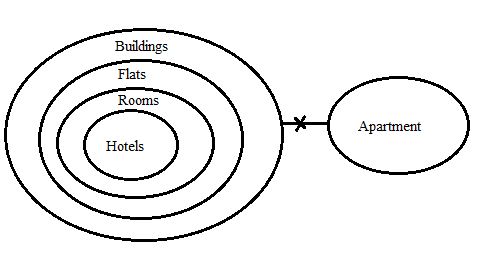
Statement : All hotels are rooms. All rooms are flats. All flats are buildings. No building is apartments. Conclusion : Some buildings may not be rooms. Some apartments are not flats. Some apartments are flats. All hotels are buildings.
More Syllogism Questions
- Statements: Only a few clouds are floors. All floors are roof. Some roof are drops. Only a few drops are procedures. Conclusions: I. Some roof are pr...
- Read the given statements and conclusions carefully. Assuming that the information given in the statements is true, even if it appears to be at variance wi...
- . Statements: Some ovens are microwaves. Only a few microwaves are toasters No oven is a grinder Conclusions: I. All ovens is being toaster is a possibilit...
- Statements: No cube is a cuboid. Some cuboids are cones. All cones are quadrilateral. Conclusion: I. No cone is a cube. II. All quadrilaterals may be cones...
- In each group of questions below are two conclusions followed by five set of statements. You have to choose the correct set of statements that logically sa...
- Statements: Only a few Proportions is Partitions. Only a few Columns is Proportions. No Column is Volume. Conclusions: I. Every Proportions can be Columns....
- Statements: Some sweaters are coats. All coats are shawls. Conclusions: I. Some sweaters are shawls. II. Some coats are sweaters.
- Statements: All phones are mobiles. Some sims are phones. No card is a sim. Conclusions: I. Some mobiles are not cards. II. Al...
- In the question below there are three statements followed by three conclusions I, II, and III. You have to take the three given statements to be true even ...
- Statements: Some oils are petrol. All diesels are oils. Conclusions: I. All diesels being petrol is a possibility. ...
Relevant for Exams:
Hey! Ask a query
Please enter email id
The email must be a valid email address.
Please enter Mobile Number
Please enter valid Mobile Number
Please enter your Doubt

Think You're Ready for RBI Grade B?
RBI Grade B 2026 Phase 1 Memory Based Paper
- 200 Questions with Detailed Solutions
- Section-wise Coverage (GA, English, Quant & Reasoning)