


Question
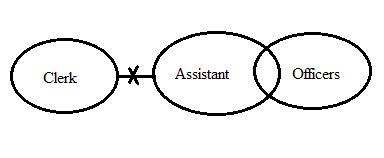
span >Statements: No clerk is an assistant. Some assistants are officers. Conclusions: I. Some clerks are not officers.
span >Statements: No clerk is an assistant. Some assistants are officers. Conclusions: I. Some clerks are not officers.
II. Some officers are assistants.
More Syllogism Questions
- Some slippers may be boots. Some socks are not rubbers. Some rubbers are not slippers
- Statements: No slim is weak All weak is lean Some lean is fat Mostly lean is big Conclusions: I. No big is slim II. Some weak is fat III. Some big which is...
- Statements: No guitar is a violin. Some violins are pianos. All sitars are pianos. Conclusions: I. Atleast some pianos are violins. II. Some gu...
- In the question below there are some statements followed by some conclusions. You have to take the three given statements to be true even if they seem to b...
- Statements: No data is a number. Some numbers are not letters. ...
- Statements: a. All spoons are forks. b. All plates are forks. c. All forks are bowls. Conclusions: I. All spoons are not bowls. II...
- Statements: No herb is a tree. Some trees are shrubs. No shrub is petal. C...
- Statements: All Flowers are Roses No Root is Stem All Root are Roses Conclusions: I. All Stem are Flower II. No Stem is Flower
- Which of the following pair have same Flat No. and same Floor No.?
- Statements: All writers are lyricists. Some lyricists are singers. Conclusions: I. Some writers are singers. ...
Hey! Ask a query
Please enter email id
The email must be a valid email address.
Please enter Mobile Number
Please enter valid Mobile Number
Please enter your Doubt

Think You're Ready for RBI Grade B?
RBI Grade B 2026 Phase 1 Memory Based Paper
- 200 Questions with Detailed Solutions
- Section-wise Coverage (GA, English, Quant & Reasoning)