


Question
If all the persons in row 1 are arranged in alphabetical order from the right end, then who among the following person sits opposite to M?
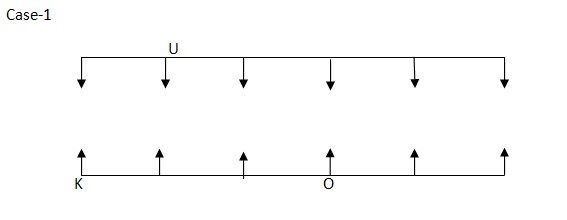
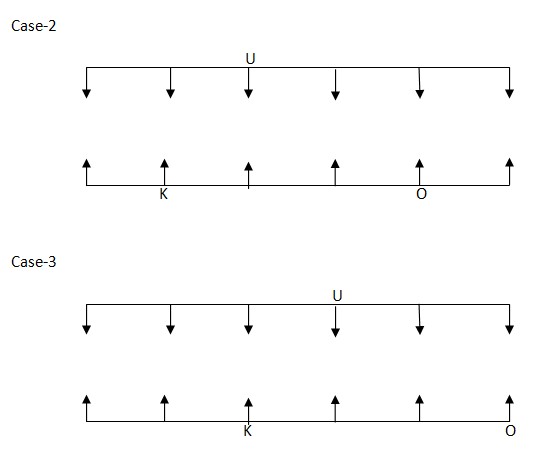 Again we have, The number of persons sit to the left of U is the same as the number of persons sits to the right of Y. W sits second to the right of Y. J sits immediate left of M, none of them sits at end of the row.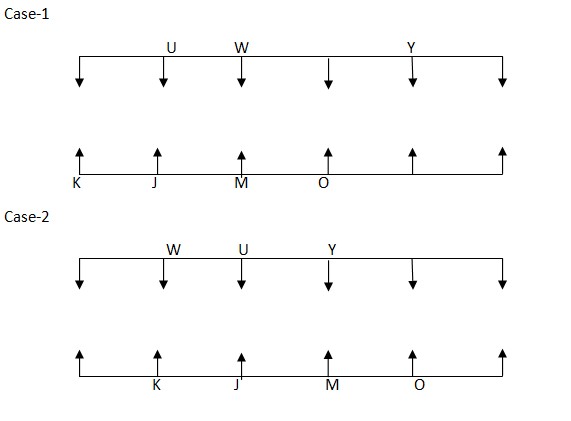
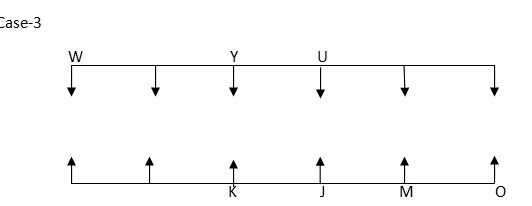 Again we have, L sits opposite to the one who sits second to the left of Z. X and Y are not immediate neighbours. From the above condition, case2 and case3 get eliminated. Case1 shows the final arrangement.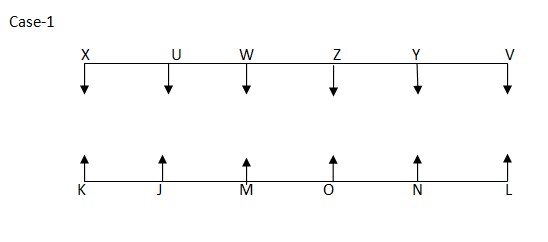
More Seating Arrangement Questions
- Who among the following sits on the extreme ends of the row?
- Which of the following statements is definitely true as per the given arrangement?
- Which of the following statement is true? I) E sits second to the left of the one who uses Lenovo II) C sits immediate right of A III) A uses Microsoft
- Four of the following five forms a group as per the given arrangement, which of the following does not belong to that group?
- Six persons J, K, L, M, N and O sit around a circular table and face towards the centre but not necessarily in the same order. O sits third to the right of...
- The Person who likes Maaza in the row arrangement sits which of the following place in the circular arrangement?
- Who sits opposite to A7?
- Who is sitting second to the left of L?
- Who among the following person sits second to the right of C?
- How many persons are sitting between T and F when counted from the left of T?
Hey! Ask a query
Please enter email id
The email must be a valid email address.
Please enter Mobile Number
Please enter valid Mobile Number
Please enter your Doubt

Think You're Ready for RBI Grade B?
RBI Grade B 2026 Phase 1 Memory Based Paper
- 200 Questions with Detailed Solutions
- Section-wise Coverage (GA, English, Quant & Reasoning)