


Question
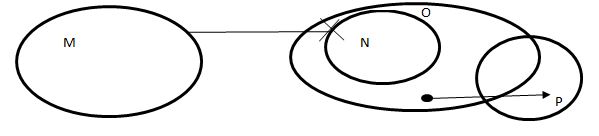
Statement: Few M are not N. All N are O. Only a few O are P. Conclusion: 1. All M can be N. 2. Some M are not P is a possibility. 3. Some P are not N. 4. All P are
Statement: Few M are not N. All N are O. Only a few O are P. Conclusion: 1. All M can be N. 2. Some M are not P is a possibility. 3. Some P are not N. 4. All P are
M.
More Reasoning Miscellaneous Questions
- 'N' is the largest three-digit number which leaves 5 as a remainder when divided by 6, 9, and 15. What is the smallest number that needs to be added to 'N'...
- In each question below is given a statement followed by two conclusions numbered I and II. You have to assume everything in the statement to be true, then ...
- A device that is connected to the motherboard is called
- Which of the following is NOT an operating system?
- यदि एक घड़ी का प्रतिबिम्ब दर्पण में दिखाई दे रहा है जिसमें 9 बजकर 25 मिनट दिखाई दे रहे हैं। वास्तविक समय क्या होगा ?
- From the given answer figures, select the one in which the question figure is hidden / embedded(rotation is not allowed).
- If the first and second letters in the word ‘INFRASTRUCTURE’ were interchanged, also the third and fourth letters, the fifth and sixth letters, and so on. ...
- How many such pairs are there in the word ‘KLING’ each of which has many letters between them in the word as they have between them in the English alphabet...
- Each even digit in the number 728945 is replaced by the next higher digit and each odd digit is replaced by the previous lower digit and the digits obtaine...
- The sale price of an item is set at 30% above the cost price. After giving a 10% discount on the marked price, what is the merchant’s profit percentage?
Relevant for Exams:
Hey! Ask a query
Please enter email id
The email must be a valid email address.
Please enter Mobile Number
Please enter valid Mobile Number
Please enter your Doubt

Think You're Ready for RBI Grade B?
RBI Grade B 2026 Phase 1 Memory Based Paper
- 200 Questions with Detailed Solutions
- Section-wise Coverage (GA, English, Quant & Reasoning)