


Question
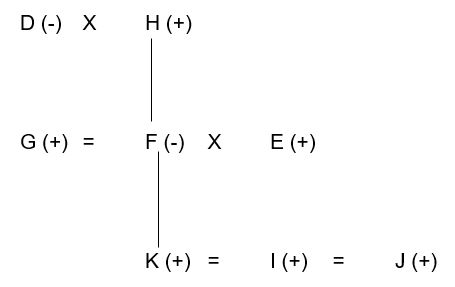
Answer the following question based on the information given below. There are eight members (D, E, F, G, H, I, J and
- K in a family of three generations. No single person in the family is a parent. There are only two members in the first generation. G is the maternal uncle of K. D is the mother of G. F is married to E. F has no daughter. F and K are not siblings. G is not married. H has only one son. E has no siblings. I and J are siblings. D has two children. How is H related to brother-in-law of E?
More Blood Relations Questions
- Answer the questions based on the information given below. There are seven persons M, N, O, P, Q, R and S in a family of three generations. There are onl...
- How is W related to mother of Z?
- Answer the questions based on the information given below. There are seven persons G, H, I, J, K, L and M in the family of three generations. No single p...
- How is P related to N if L is a female?
- _____ is sister of _____.
- How is P related to M’s son?
- How many male members are in the family?
- Who is the grandmother of S?
- How N is related to O?
- U is mother of B, who is brother of D. G is married to T and the couple has only two children. A is brother-in-law of C, who is unmarried and daughter of T...
Relevant for Exams:
Hey! Ask a query
Please enter email id
The email must be a valid email address.
Please enter Mobile Number
Please enter valid Mobile Number
Please enter your Doubt

Think You're Ready for RBI Grade B?
RBI Grade B 2026 Phase 1 Memory Based Paper
- 200 Questions with Detailed Solutions
- Section-wise Coverage (GA, English, Quant & Reasoning)