


Question
Taking cognizance means:
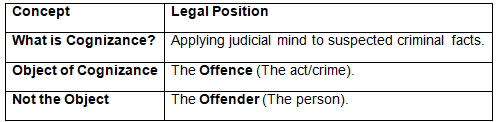 New BNSS Procedural Safeguard: Pre-Cognizance Notice However, an important distinction must be noted. Section 223 of the BNSS (relating to the procedure for taking cognizance on complaints) introduces a procedural safeguard absent in the old CrPC: "Provided that no cognizance of an offence shall be taken by the Magistrate without giving the accused an opportunity of being heard." This provision requires the magistrate to: 1. Examine the complainant and witnesses on oath before taking cognizance 2. Issue notice to the accused before cognizance is formally taken 3. Allow the accused to submit a defensive case (not a full trial, but a meaningful hearing) 4. Only then take cognizance after considering all submissions This procedural safeguard does NOT alter the substantive principle that cognizance is of the offence, not the offender. It merely adds a pre-cognizance hearing requirement.
 More Administrative Interpretation and Maxims Questions
- In which situation can a court order the attachment of the property of a judgment debtor?
- Where the Adjudicating Authority passes an order for liquidation of the corporate debtor the resolution professional appointed for the __________ shall act...
- Whose opinion as to electronic signature is a relevant fact:
- According to Chhattisgarh Land Revenue Code 1959, who is not a Revenue officer?
- When can an appeal lie from SAT to Supreme Court?
- Who shall appoint employees of SAT?
- The term 'a Cheque in the electronic form' is defined in Negotiable Instruments Act 1881 under:
- Writ of Mandamus cannot be issued, where a fundamental right is infringed by
- The interim resolution professional conducts the first meeting of the Committee of Creditors ________________
- If a person makes non-natural use of his land by collecting there something which is likely to do mischief by escape, he will be liable if the thing so col...
Relevant for Exams:
Hey! Ask a query
Please enter email id
The email must be a valid email address.
Please enter Mobile Number
Please enter valid Mobile Number
Please enter your Doubt

Think You're Ready for RBI Grade B?
RBI Grade B 2026 Phase 1 Memory Based Paper
- 200 Questions with Detailed Solutions
- Section-wise Coverage (GA, English, Quant & Reasoning)