


Question
Who sits adjacent to N?
- I The one who faces G I
- I The one who faces S II
- I The one who faces E
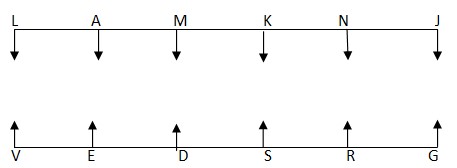
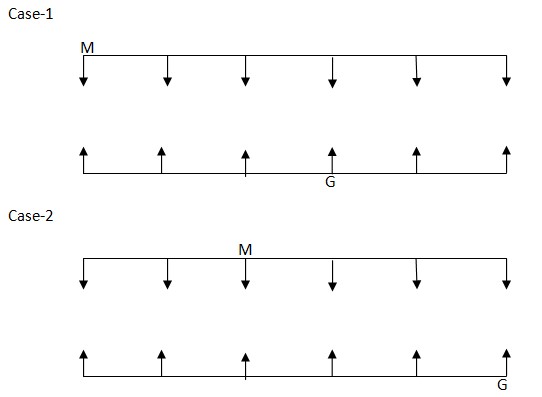 Only one person sits between M and N. The number of persons sitting to the left of N is the same as to the right of R. From the above condition, there are three possibilities.
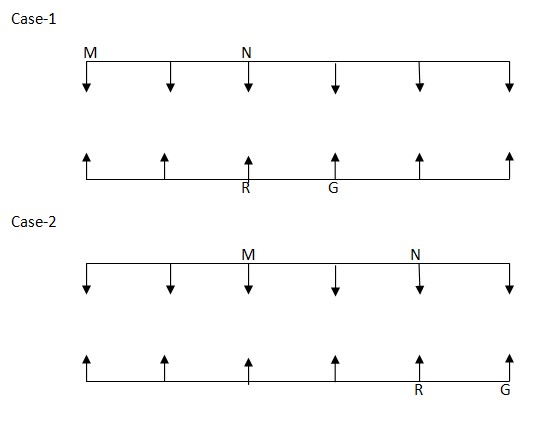
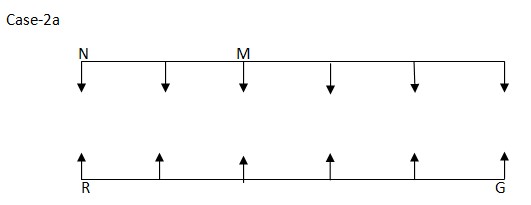 Only two persons are sitting between R and the one who sits opposite to A. The number of persons who sits between A and N is the same as between V and S. V and R are not immediate neighbors. D sits to the right of E and does not face A. From the above condition, case1 and case2a get eliminated. Case-2
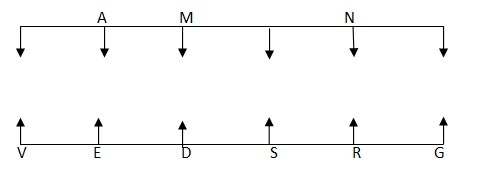 K sits to the left of L and to the right of J. From the above condition, case2 shows the final arrangement.
More Aplhabetical Coding Questions
- What is the code for “Every pupil should participate”?
- How many girls have MBA degrees?
- If in the given words, the second last alphabet from the right side of each word is omitted and all the other letters of the words are replaced by the prec...
- Select the option that is related to the fifth letter-cluster in the same way as the second letter-cluster is related to the first letter cluster and the f...
- Statement: Some doors are tables Only tables are benches Only a few tables are windows No door is clock Conclusion: I. No bench is window II. All ta...
- In the question below there are four statements followed by three conclusions I, II and III. You have to take the four given statements to be true even if ...
- Find the wrong term in the series given below. '58, 64, 52, 70, 44, 76, 40
- In a certain code language, STRAIGHT is written as TSARGITH. How will THURSDAY be written as in that language?
- 'A $ B' means 'A is the parent of B'. A # B' means 'A is the brother of B'. 'A @ B' means 'A is the grandfather of B'. 'A & B' means 'A is the son of B'. I...
- A dice with six faces is marked with six numbers 1, 2, 3, 4, 5, and 6 respectively. This dice is rolled three times and three positions are shows as below....
Relevant for Exams:
Hey! Ask a query
Please enter email id
The email must be a valid email address.
Please enter Mobile Number
Please enter valid Mobile Number
Please enter your Doubt

Think You're Ready for RBI Grade B?
RBI Grade B 2026 Phase 1 Memory Based Paper
- 200 Questions with Detailed Solutions
- Section-wise Coverage (GA, English, Quant & Reasoning)