


Question
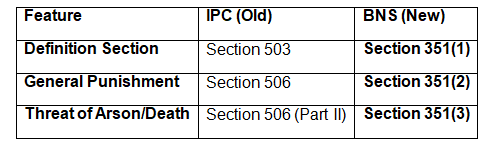
A, for the purpose of inducing B to resist from prosecuting a civil suit, threatens to burn B's house. A is guilty of
More Administrative Interpretation and Maxims Questions
- When cases are instituted otherwise than on police report and the Magistrate shall discharge the accused if
- A company may issue fully paid-up bonus shares to its members from ________________
- According to section 105 of the Bharatiya Nagarik Suraksha Sanhita, 2023, what is the prescribed method for recording the process of conducting a search, t...
- Which department of Food and Agriculture Organization (FAO) provides support to the entire FAO organization?
- What is the term of office for the President of India?
- What is the primary purpose of Alternate Dispute Resolution?
- How often does the Authority review the quality of the website or repository as per the provisions laid down under the IFSCA Act?
- A financial creditor either by itself or jointly withother financial creditors, or any other person on behalf of the financial creditor, as may be notified...
- According to section 7(10) of the Court Fee Act, court fee in the suit for specific performance would be:
- Kaziranga is known for :
Hey! Ask a query
Please enter email id
The email must be a valid email address.
Please enter Mobile Number
Please enter valid Mobile Number
Please enter your Doubt

Think You're Ready for RBI Grade B?
RBI Grade B 2026 Phase 1 Memory Based Paper
- 200 Questions with Detailed Solutions
- Section-wise Coverage (GA, English, Quant & Reasoning)