


Question
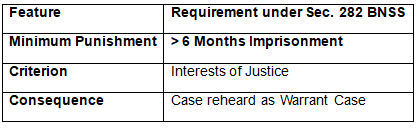
The power of court to convert summons- cases into warrant- cases apply to an offence punishable with imprisonment
More Administrative Interpretation and Maxims Questions
- The power of supreme court to transfer cases and appeals from one High Court to another High Court can be exercised on an application by :
- An application for arbitration shall be filed___
- Who has the power to impose restrictions on trade, commerce and intercourse between one state and another in public interest?
- As per the Motor Vehicles Act how can the Claims Tribunal proceed to recover an amount due from any person under an award?
- Where a judgement-debtor has, by fraud or force, prevented the execution of a decree or order within the period of limitation, the court may, on the applic...
- In which of the following cases, the Supreme Court held first time that the principles of natural justice are applicable to administrative proceedings?
- An offer must be communicated as an action without the knowledge of the proposal is no acceptance was held in____________________
- Can a depository delegate its functions as a depository to any other person?
- Under what circumstances can any authority authorized by the Central Government detain an aircraft, as per the Aircraft Act?
- Which of the following is a tort of trespass to person?
Hey! Ask a query
Please enter email id
The email must be a valid email address.
Please enter Mobile Number
Please enter valid Mobile Number
Please enter your Doubt

Think You're Ready for RBI Grade B?
RBI Grade B 2026 Phase 1 Memory Based Paper
- 200 Questions with Detailed Solutions
- Section-wise Coverage (GA, English, Quant & Reasoning)