


Question
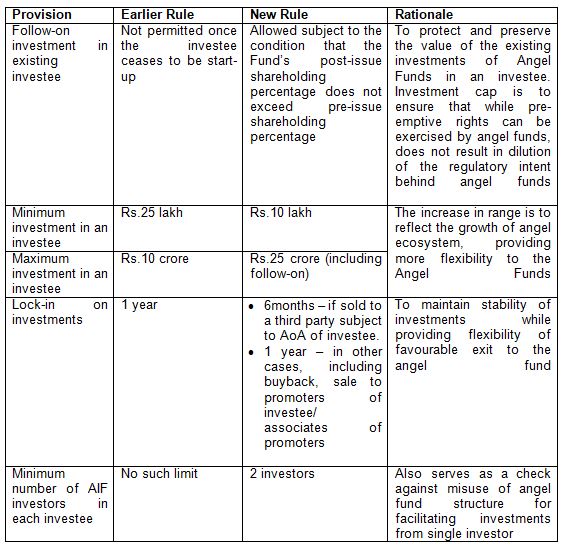
As per the revised SEBI Guidelines for Angel Funds released in September 2025, what is the maximum investment in an investee company, including follow-on investments, that can be made by an Angel Fund?
More Capital Market Questions
- The investment in REITs made by Mutual funds and SIFs will be considered as investment in _____________, with effect from 1st January 2026.
- As per SEBI regulations, REITs and InvITs are required to distribute at least what percentage of their net distributable cash flows to unit holders?
- The 12 digit alpha-numeric number which helps to uniquely identify a specific security is known as _________
- Under the Basel III guidelines, it is advised to create a countercyclical capital buffer of 0-2.5%. Which of the following is not true about this buffer:
- What is the primary purpose of the CHAMPIONS platform?
- The object of the issue using a prospectus can be varied provided it is pre-approved as per _________ of the Companies Act 2013.
- What is the Loan-to-Value (LTV) ratio for loans against gold, given by Scheduled Commercial Banks (SCBs)?
- Angel Funds pool money from high-net-worth individuals or companies, called angel investors, for investing in business start-ups. Angel funds are categoris...
- PCA Framework consists of ____________ parameters.
- A Foreign Portfolio Investor (FPI) needs to register in India with SEBI. A DDP grants the certificate to the FPI, on behalf of SEBI. What does DDP stand fo...
Hey! Ask a query
Please enter email id
The email must be a valid email address.
Please enter Mobile Number
Please enter valid Mobile Number
Please enter your Doubt

Think You're Ready for RBI Grade B?
RBI Grade B 2026 Phase 1 Memory Based Paper
- 200 Questions with Detailed Solutions
- Section-wise Coverage (GA, English, Quant & Reasoning)