


Question
What is “C” in Berlo’s SMCR Model of communication?
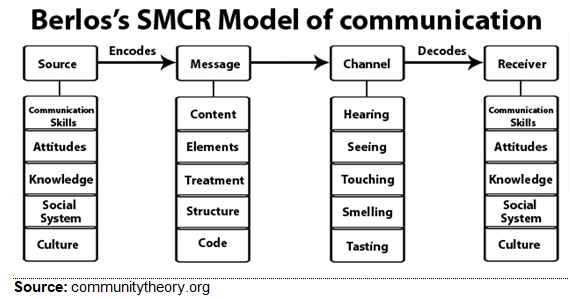
More Banking System in India Questions
- For Domestic Scheduled Banks, what is the minimum target for Priority sector lending
- Which type of bond has a duration equal to its remaining time to maturity?
- Which of the following statements are correct regarding grants provided to FinTech firms under the FinTech Incentive Scheme, 2022? i) FinTech entities are ...
- Which among the following is a type of budgeting technique where the previous year’s figures are not used as a base for preparing next year’s budgets.
- Funds flow statement is prepared to :
- What is the revised timeline for Credit Information Companies (CICs) to ingest credit information data from Credit Institutions (CIs), effective January 1,...
- Which section of the BRSR reporting framework focuses on information about the listed entity, including subsidiary companies?
- A bank’s net interest income (NII) is ₹80 crores, its interest expense is ₹40 crores, and it has non-interest income of ₹20 crores. What is the bank's oper...
- Which of the following is not a condition for classifying an account under Special Mention Account (SMA-1)?
- What do niche financial centers focus on?
Hey! Ask a query
Please enter email id
The email must be a valid email address.
Please enter Mobile Number
Please enter valid Mobile Number
Please enter your Doubt

Think You're Ready for RBI Grade B?
RBI Grade B 2026 Phase 1 Memory Based Paper
- 200 Questions with Detailed Solutions
- Section-wise Coverage (GA, English, Quant & Reasoning)